Disclaimer: Sabrina Godin made these photos and projects while working as the Lead Interpretation and Education Ranger for Cape Lookout National Seashore. All of these photos are public domain.

Disclaimer: Sabrina Godin made these photos and projects while working as the Lead Interpretation and Education Ranger for Cape Lookout National Seashore. All of these photos are public domain.
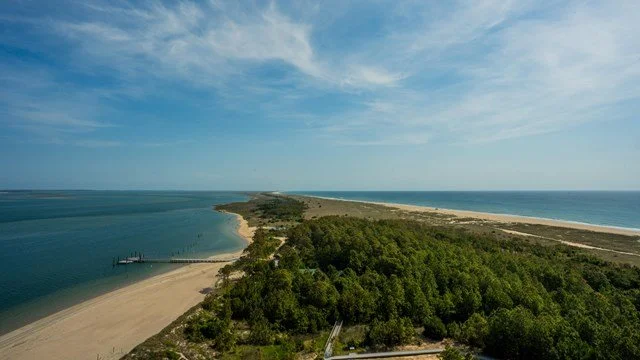
Cape Lookout Lighthouse is located at the most southern point of the Outer Banks. The view from the top of the lighthouse, shows how the island continues for 48 miles north.
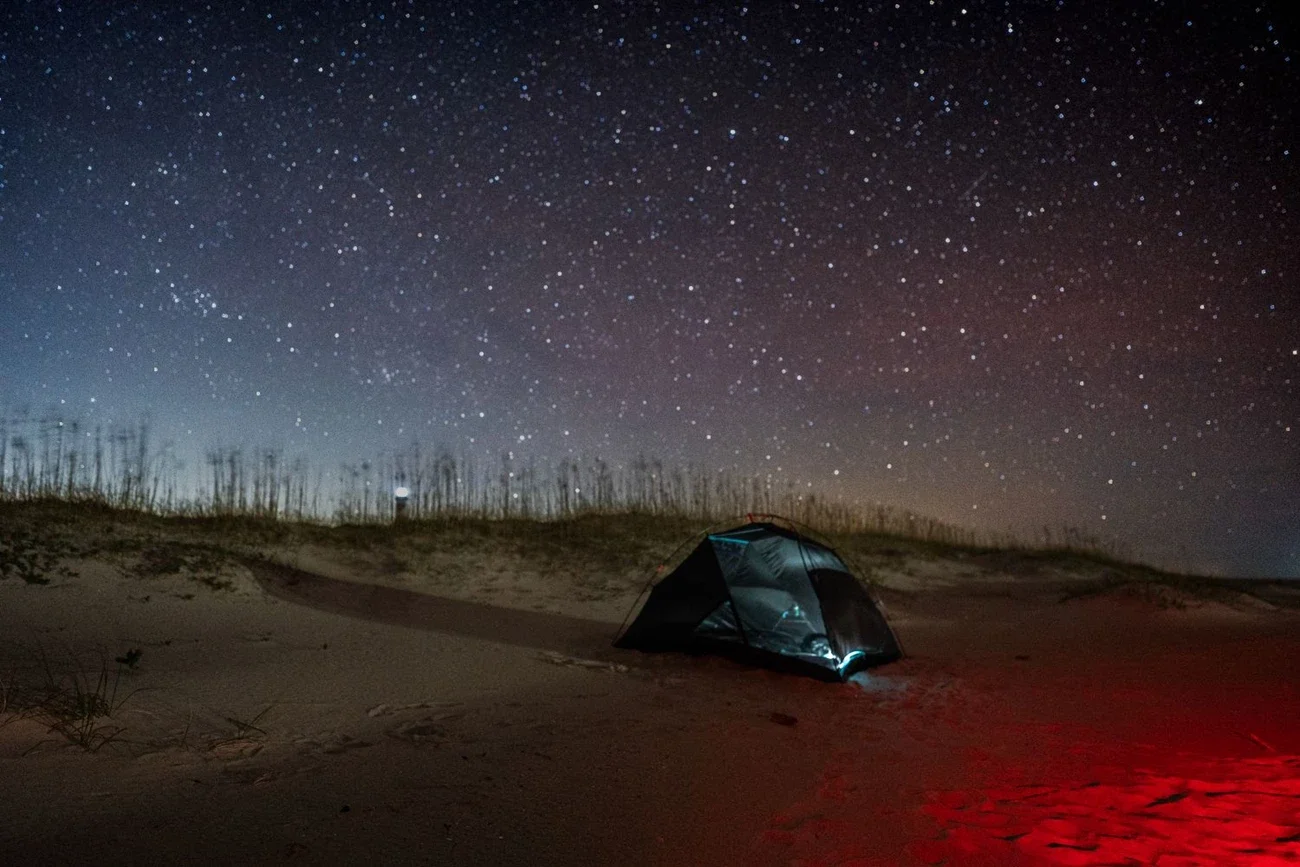
Cape Lookout National Seashore is the only International Dark Sky Park on the Eastern Seaboard. Visitors can enjoy camping under the starry filled night sky while also listening to the crashing waves.
Hurricane Erin came close to the Outer Banks in August 2025. The tall waves generated by the hurricane winds called surfers to the Cape Lookout beaches.
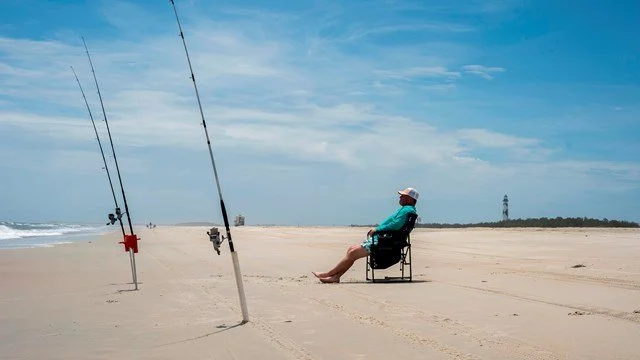
Cape Lookout National Seashore is 56 miles of undeveloped barrier islands. Anglers from all over come to the remote beaches to find peace while surf fishing.
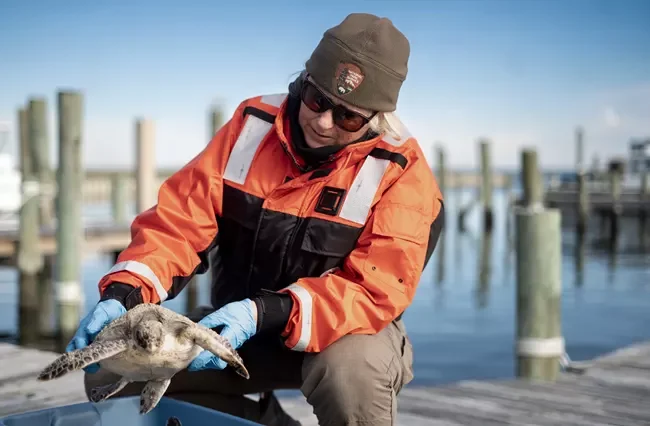
During the winter, cold stunned sea turtles was up along the Outer Banks. National Park biologists work to collect the sea turtles to be transported to the mainland to be rehabilitated.
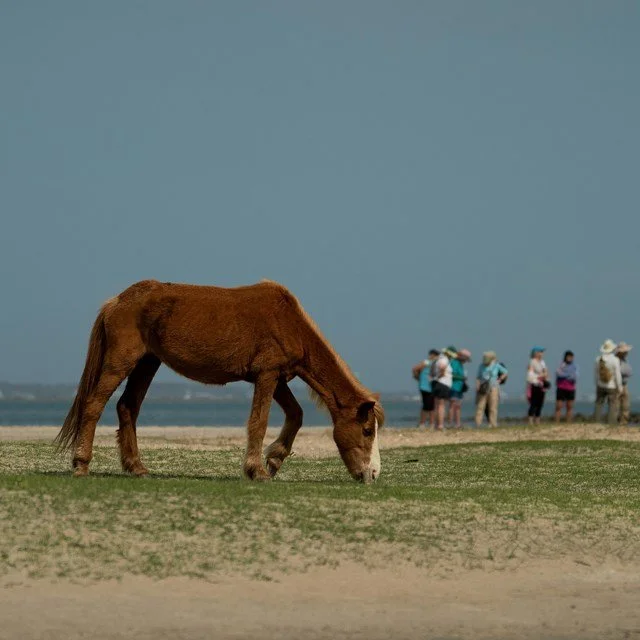
Shackelford Banks is an 8 miles island home to over 100 wild horses. Only accessible by boat, visitors venture to the islands for the chance to see wild horses grazing on the beach.
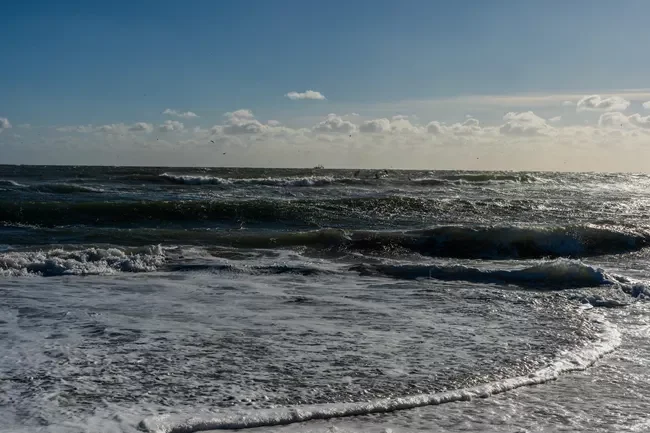
Waves crash along the barrier islands on Cape Lookout National Seashore.
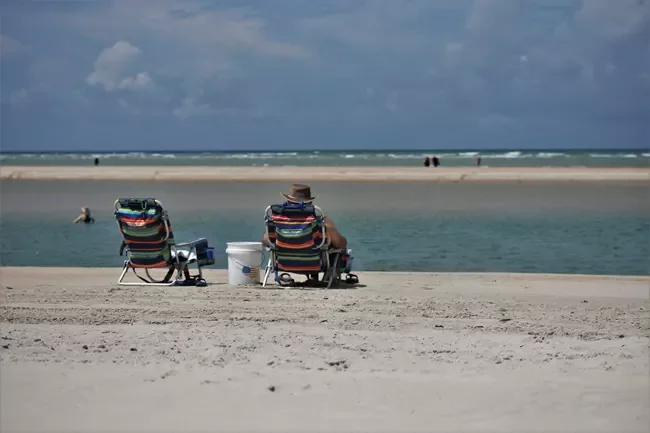
Visitors enjoy the chance to fill like the only people left in the world. Setting up a beach picnic is a common activity for visitors at Cape Lookout National Seashore.
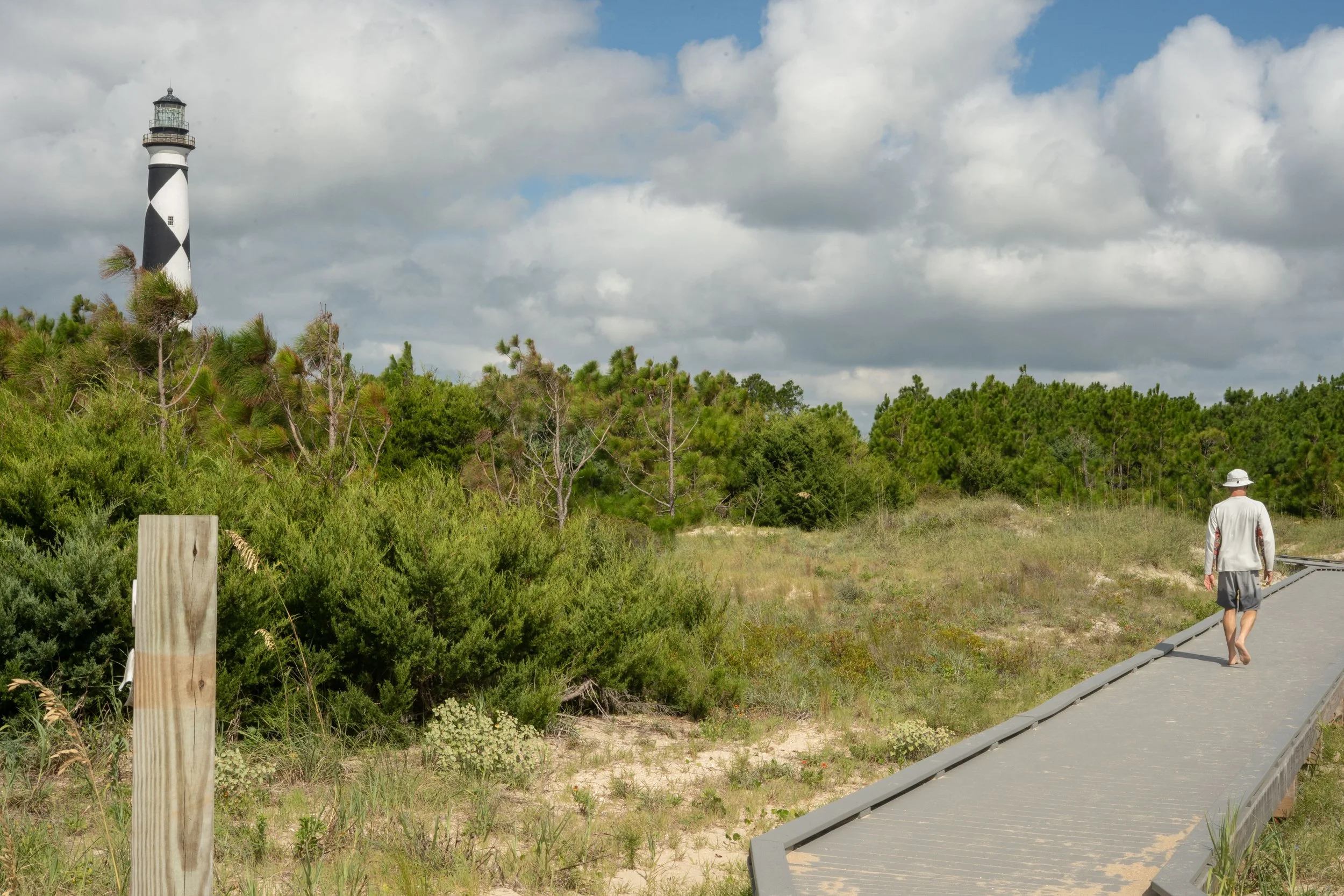
Cape Lookout Lighthouse has been closed for serval years due to much needed restoration. The main spiral staircases needs to be restored. Once complete, visitors will be able to climb the lighthouse.
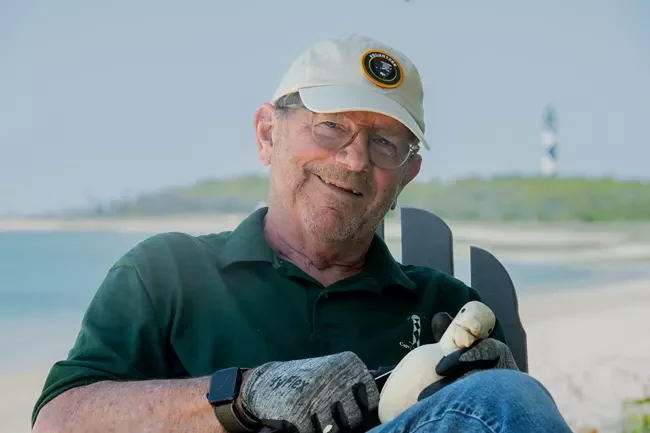
Cape Lookout National Seashore hosts Dr. Stan Rule, as the 2024 Artist in Resident. During his residency, he carved shorebird decoys for the National Park Service to use during education programs.
In 2024, Ranger Sabrina Godin researched, created, and designed “History of Portsmouth Island” to create an accessible way to experience one of the last maritime villages in the world. This project is published on www.nps.gov/calo.